
Business
Court orders Winding Up of Keystone Bank and forefiture of Majority Shares to FG

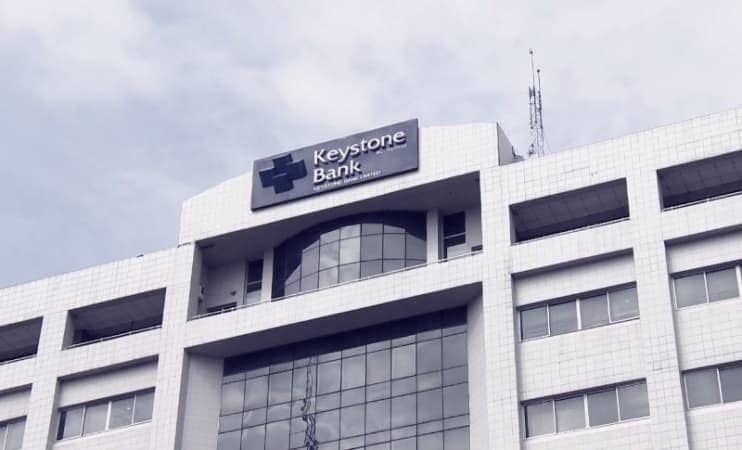
An Ikeja Special Offences Court on Tuesday ordered the winding up of Keystone Bank Ltd and forfeiture of 6,250,000,000 units of the ordinary shares of N1.00 each, to the Federal Government.
The News Agency of Nigeria (NAN) reports that Justice Rahman Oshodi gave the order in a judgment in Lagos.
The judgment followed guilty plea by the Chairman of the company, Umaru Hamidu-Modibbo, who represented the company.
The chairman pleaded guilty to an amended six-count charge brought against Sigma Golf by the Economic and Financial Crimes Commission (EFCC).
The charge bothered on conspiracy to steal, stealing, transfer of property derived from stealing with the aim of concealing the origin and evade the legal consequences.
Sigma Golf had entered a plea bargain agreement with the EFCC.
The company was arraigned alongside a former Managing Director of Asset Management Corporation of Nigeria (AMCON), Ahmed Kuru.
While Sigma Golf pleaded guilty to the six-count charge, Kuru pleaded not guilty. Oshodi held that he was satisfied that Sigma Golf admitted guilt of its own volition.
He said: “I am satisfied that the second defendant was aware of the nature of the amended information and the consequences of the plea. “
All its rights, title and interest in the 6,250,000,000 units of Keystone Bank’s ordinary shares of N1.00 each shall be forfeited to the Federal Government of Nigeria represented by the Economic and Financial Crimes Commission.
“In respect of the facts and circumstances of the instant case, the complainant agrees not to pursue criminal charges both now and in the future against Alhaji Umaru Hamidu-Modibbo and Sigma Golf Nig Ltd.”
The judge also held that Hamidu-Modibbo agreed to fully cooperate with EFCC in any ongoing or future investigations relating to the matter, including providing truthful testimony if required.
NAN reports that EFCC had stated that Kuru, Hamidu-Modibbo, Ifie Sekino (still at large) and Sigma Golf, sometime in 2016, conspired to steal by dishonestly converting N20 billion, property of AMCON, through Heritage Bank Ltd. to the use of Sigma Golf for acquisition of Keystone Bank Ltd.
The commission also stated that Sigma Golf and the others transfered N10 billion derived directly from stealing with the aim of concealing the origin of the said sum and evade the legal consequences.
EFCC lead counsel, Mr Rotimi Oyedepo , told the court that the commission agreed with Sigma Golf on the plea bargain in accordance with legal principles, justice and public policy.
Oyedepo submitted that the terms of the plea bargain agreement included the company pleading guilty to all the six counts and winding up.
NAN reports that the chairman and the legal representative of Sigma Golf, Mr David Idemu, confirmed to the court that the plea bargain agreement was made voluntarily. Kuru’s lawyer, Mr Olasupo Shasore (SAN), did not oppose the agreement.
Oshodi consequently convicted Sigma Golf and adopted the terms of the agreement. The judge earlier granted Kuru bail in the sum of N50 million with two sureties, who must swear to an affidavit of means.
The sureties must also provide evidence of tax payment in the last three years, according to the judge. Oshodi adjourned the case until March 7 for ccommencement of trial.









Business
Exchange Rates Today Friday, 12 June
Black Market Rates
US Dollar (USD) ₦1,397
Great British Pound (GBP) ₦1,850

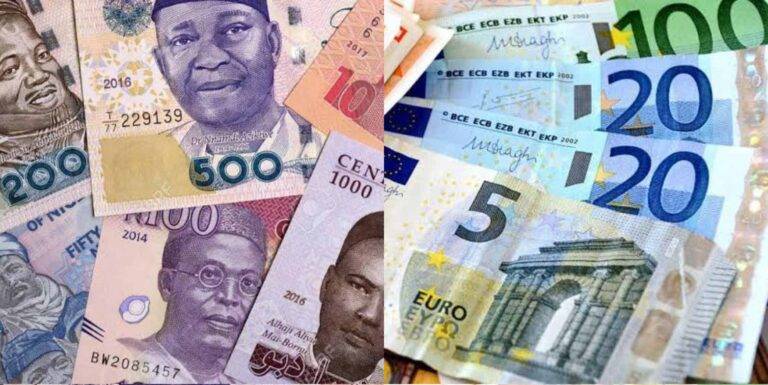
Official CBN Exchange Rates
US Dollar (USD) ₦1,363. 83
Great British Pound (GBP) ₦1,821. 25
EURO (EUR) ₦1,572. 90
SWISS FRANC (CHF) ₦1,706. 49
JAPANESE YEN (JPN) ₦8.50
CHINESE YUAN (CNY) ₦201.20
West African CFA (XOF) ₦2.40
West African Unit Account (WAUA) ₦1,857. 45
SAUDI RIYAL (SAR) ₦363. 29
SOUTH AFRICAN RAND (ZAR) ₦82.61
Black Market Rates
US Dollar (USD) Buy ₦1,397 Sell ₦1,405
Great British Pound (GBP) Buy ₦1,850 Sell: ₦1,870
EURO (EUR) Buy ₦1,587 Sell ₦1, 607
Canadian Dollar (CAD) Buy ₦1,030 Sell ₦1,100
South African Rand (ZAR) Buy ₦75 Sell ₦90
UAE Dirham Buy ₦350 Sell ₦370
Chinese Yuan Buy ₦180 Sell ₦200
Ghana Cedi (GHS) Buy ₦95 Sell ₦110
West African CFA Buy ₦2, 380 Sell ₦2, 460
Central African CFA Buy ₦2, 220 Sell 2,300
Australian Dollar Buy ₦800 Sell ₦900
Business
Airtel launches data calculator to counter depletion complaints
Commenting on the significance of the launch, Dinesh Balsingh, Chief Executive Officer, Airtel Nigeria, said that the company remains focused on building a network and customer experience ecosystem anchored on trust, transparency and continuous improvement.

Airtel Nigeria has launched the Airtel Web Data Calculator, a new digital tool designed to help customers estimate and better understand their internet data consumption based on real-life usage patterns.
Available through Airtel’s website, the calculator enables customers to estimate data usage across common digital activities such as video streaming, social media engagement, voice and video calls, and everyday web browsing.
Speaking on the launch, Oladokun Oye, Customer Experience Director, Airtel Nigeria, said that the initiative reflects Airtel’s commitment to customer empowerment and service transparency.
“As Nigerians become increasingly dependent on digital services for work, education, entertainment and communication, it is important that customers have clear visibility into how their data is consumed.
The Airtel Web Data Calculator was developed to help our customers understand their usage patterns better, make informed choices, and enjoy greater confidence in their digital experience,” he said.
Commenting on the significance of the launch, Dinesh Balsingh, Chief Executive Officer, Airtel Nigeria, said the company remains focused on building a network and customer experience ecosystem anchored on trust, transparency and continuous improvement.
“The future of telecommunications will be defined not only by network investments but also by how effectively operators help customers understand and manage their digital lives. The Airtel Web Data Calculator represents a practical innovation that places more information and control directly in the hands of our customers.” He said.
Business
Kingsley Moghalu chairs Bluecode Africa subsidiary in Nigeria
Moghalu served as Deputy Governor of the Central Bank of Nigeria from 2009 to 2014, heading the Financial System Stability and Operations Directorates at different periods.
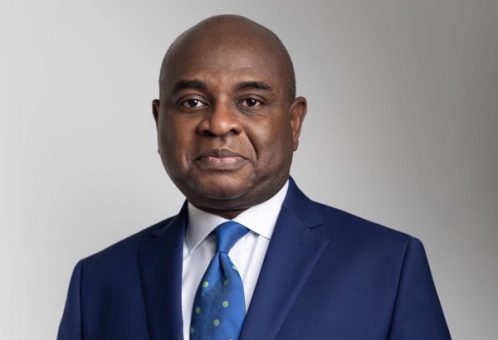
Bluecode Africa, the European payments infrastructure operator backed by leading US and European institutional investors, has named Prof Kingsley Chiedu Moghalu as Chairman of the Advisory Board of its Nigerian subsidiary, Bluecode Payments Nigeria Limited as the company formally enters the Nigerian market.
The appointment was jointly announced by Chris Pirkner, Founder of Bluecode, and Odin Krismayr, Managing Director of Bluecode Africa, who described it as a foundational governance decision for the company’s Nigerian and continental operations.
Moghalu served as Deputy Governor of the Central Bank of Nigeria from 2009 to 2014, heading the Financial System Stability and Operations Directorates at different periods.
He led the team that introduced the unique-identifier Bank Verification Number (BVN), enrolling 50 million banking users, simplifying Know Your Customer (KYC) procedures, and doubled Nigeria’s financial inclusion rate from 33 to 60 per cent.


Edo Queens Win 2025/26 NWFL Title

World Cup: Japan Holds Netherlands To 2-2 Draw

Police begins enforcement on vehicles with covered number plates

Tech Expert, Zuckerberg trains with UFC champions, Adesanya, Alexander

Organ Trafficking: Ekweremadu bags 10 years in UK prison

SAINT OBI: Between his marriage and his death
-

 Crime2 days ago
Bandits Kill 19 Farmers, Injure 12 Others in Fresh Attack in Zamfara
-

 Crime2 days ago
BREAKING: Retired General Dies in Kidnappers’ Captivity, Demand Release of Gang Members
-

 Opinions3 days ago
Democracy Still Struggling 33 Years After June 12, PDP Laments by Comrade Ini Ememobong
-

 Sports2 days ago
Balogun: This is something I dreamed of for a long time
-

 Sports4 hours ago
World Cup: Sweden beats Tunisia 5-1
-

 Sports2 days ago
FIFA World Cup 2026 Day 3: Qatar draws Switzerland 1: 1
-
 Sports3 days ago
FIFA World Cup Day 2: Canada holds 1-1 Bosnia-Herzegovina
-
 International4 hours ago
US and Iran to sign historic peace deal June 19 in Switzerland