
Opinions
Excitements As Dr Otti Signs Greater Ohafia Development Authority Bill into Law

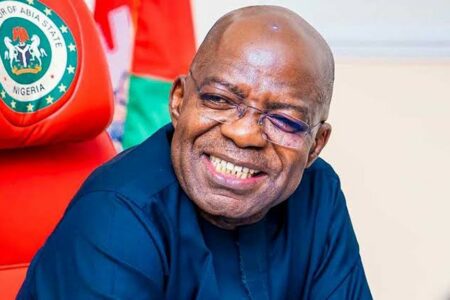
By Charles O. Kalu
In Abia State, particularly in the state’s North Senatorial zone, there is excitement in the air for non-stop speedy development of infrastructure, and the reasons for this enthusiasm everywhere are not far to seek.
Indeed, great things are happening in Abia State, and the people are happy that finally, Otti is returning this once front-line state to where it rightly belongs.
For instance, Dr. Michael Iheonukara Okpara and Dr. Ogbonnaya Onu, to mention but a few, remain towering figures and precious gifts from the people of this part of Nigeria to the world of politics, administration, scholarship, and professionalism.
So, the renaissance taking place in Abia State today, could not have come at a better time.
For a state usually referred to as ”God’s Own State”, it appears from the look of things that the Almighty has finally taken charge of the affairs of Abia through a thoughtful, visionary, and courageous governor who is ready to make a mark.
So, this newly inaugurated Greater Ohafia Development Authority, GODA, in the state is a welcome development, and the people are very glad that it eventually came to pass in their lifetime.
In many ways, Monday, October 28, 2024, will remain memorable because it was on that day that the historic signing took place in the presence of the governor, the state’s Attorney-General and Commissioner for Justice, Barrister Ikechukwu Uwanna., also in attendance were other distinguished members of the State’s Executive Council. But the icing on the cake for the people of Ohafia, is having the very best of experts and true patriots on the board and administration of GODA.
They include; Prof. Awa U. Kalu, a Senior Advocate of Nigeria, SAN, a former Abia State Attorney General and Commissioner for Justice is the Chairman of the Authority; Engineer Obinna Odum, a Petroleum and Gas Engineer as an established Project manager is the Director-General and other members like Dr. Onyinye Rufus-Obi who is a politician, entrepreneur and experienced boardroom guru; Quantity Surveyor of repute, Ikechukwu Orika and Chief Johnson Chukwu, who is an accountant and asset management consultant.
Governor Otti had said during its inauguration that “GODA would serve as a robust institutional vehicle for the rapid socio-economic transformation of the Abia North zone”.
One thing is certain, and that is the fact that the good people of Abia are now at an important point in their struggle and determination to change their narrative for good, and forever, too.
For the purpose of historical clarity, development agencies, especially in this part of the world are always value-added in many ways.
Like Abia, a few other forward-looking states in Nigeria are also, through these special multi-purpose vehicles, creating values, empowering their citizens, engendering confidence in government and addressing project deficits in a special way.
As everyone knows, development agencies or authorities are vehicles for growth and sustainable development.
Apart from the fact that these agencies remain veritable platforms for teamwork among both public and private sectors and civil societies, they also provide meaningful and effective use of local resources where they are found.
In their own special ways, they accelerate regional development, provide sustainability, tackle natural resource issues and mitigate local conflicts that could erupt, with their vision and understanding of risk management strategies at the local level.
This long-awaited opportunity that is finally here, is a big deal, no doubt.
As everyone knows, development agencies or authorities are vehicles for growth and sustainable development.
Apart from the fact that everyone in the state is in high spirits, citizens of the state also appear to be in agreement with government, irrespective of party affiliation, age, sex, faith or geographical location.
Now, the government can focus on more important issues because this development authority promises to do many things, including tackling all outstanding matters on the residual list. For instance, this is a good opportunity to re-evaluate all unresolved issues around the establishment of public burial grounds and cemeteries in line with the dictates of growth and urbanization. It is already evident that at the end of the day, all the wards in Ohafia Local Government Area and several other communities will not be the same again.
Even as there are high expectations in terms of employment opportunities and a better life for everybody, these people at the grassroots are also openly setting agenda especially with regard to improving their living conditions.
Moreover, part of this agenda-setting includes but not limited to abolishing decrepit public toilet system dotting almost every community in Ohafia, Nkporo, Abiriba and other parts of Abia North unlike modern conveniences as can be found in other developing cities which Ohafia is trying to emulate.
Modernized public conveniences will be for good of a greater number of people and an improved public hygiene. But there are also other basic areas of needs that the people are also desirous of.
They include encouraging the establishment of cottage industries; creating the necessary environment for mechanized farming and farm settlements like in the First Republic; effective urban planning to ensure that these emerging cities are well-equipped to handle population growth, environmental challenges and economic activities.
An attempt should also be made towards the restoration of public utilities like electricity, good roads and pipe borne water.
Furthermore, GODA should work towards an organized and harmonious development plan for all the emerging cities in its area of jurisdiction.
This is so because of the unplanned development currently going on in these communities, especially in Ohafia.
GODA should consider opening up and improving the roads infrastructure in and out of the various communities in Ohafia, Nkporo and Abiriba as the current road network cannot carry the vehicular traffic in these fast developing cities.
This is in addition to collaborating with aid agencies so as to attract funding in all the critical areas mentioned above. After all said and done, the Greater Ohafia Development Authority should strive to mobilize their sons, daughters and every person of goodwill in the zone such as Obu Ohafia Association and such other critical stakeholders to join hands in rebuilding and developing the area for the next generation.
In truth, these are interesting times in God’s Own State. For instance, a community leader who spoke on the condition of anonymity recently extolled the virtues of Otti, whom he described as a Godsend for a people who had lost hope over the years.
I quote him: “As a believer, I knew before now that after darkness, comes light.”
In this state, and everyone can bear witness to that, we endured incongruities and inanities for many decades under governors and public officers who were ill-prepared for service.
Today, a competent and knowledgeable governor who knows what the issues are, is in the saddle, and we are all better for it.
Looking back, one can only but thank God for bringing us this far in spite of the many challenges of leadership across the country at this time.
We are indeed lucky to have a governor like Alex Otti who means well for everyone in Abia State.And we are also happy that we are witnessing in our lifetime, the end of the years of the locust. Thank you, Alex Otti, for making the difference”.
No one in Abia State, including professional politicians, critics, and even members of the opposition parties, expected anything less from Otti, the innovator who is pushing the boundaries and aggressively following his visions.
A First-Class graduate of the University of Port-Harcourt who also finished as best student at Ngwa High School Aba, in Abia State, Otti is an Economist, Banker, Investor, Public Intellectual, and Philanthropist.
This uncommon politician has brought all his strengths, accomplishments, and network of friends to bear in the governance of Abia State. Any surprises?
▪︎Kalu, who is a broadcast journalist, is the Social/Publicity Secretary of the Nigerian Guild of Editors, NGE, and the author of the book The Power of an Editor, writes from Abuja.


Osiri University, based in Lincoln, Nebraska, has appointed Nigerian-born policy analyst and business strategist Dr. Victor Okhai as Dean of its School of Business.
The appointment was unanimously approved by the university’s Council of Elders at its August 2026 meeting and takes full effect on January 1, 2027.
Born in Edo State, Nigeria, Okhai brings extensive experience across business, investment, academia, technology, and the creative industry. He holds two doctoral degrees: one in Business Leadership from the University of Nigeria, Nsukka, and another in Film and Media Studies from Gregory University, Uturu. His areas of expertise include leadership, film, innovation, strategy, sustainability, and globalisation.
Okhai currently serves as Senior Vice President of Diaspora Capital Advisors LLC, an investment banking firm based in Olympia, Washington, and as Head of Global Partnerships at Plotweaver, a UK-based artificial intelligence startup. He is also a co-founder and immediate past president of the Directors Guild of Nigeria.
He already teaches at Osiri University’s Schools of Business and Humanities, delivering courses in Leadership, International Business, Film Producing, and Directing for Film and Theatre. He has served on juries and selection committees for major international film festivals and awards, including FESPACO, the Africa Movie Academy Awards (AMAA), and the Nigeria Media Merit Award.
The university said his appointment is expected to strengthen its commitment to bridging academic theory with practical industry experience, particularly in preparing professionals across Africa and the diaspora for leadership and entrepreneurial roles in a globalised world.
Okhai succeeds Dr. Abdoulaye Mbengue, who has served as Dean since 2024. During his tenure, Mbengue oversaw major academic expansion, including the introduction of an MBA in Sustainable Leadership, six bachelor’s degree programmes, and an associate degree programme. He will remain with the university as Assistant Dean of the School of Business and continue teaching Sustainable Leadership.
Osiri University is an African-inspired institution headquartered in Lincoln, Nebraska, and guided by the Ubuntu philosophy of community, cooperation, and shared prosperity. It offers associate, bachelor’s, master’s, and doctoral degrees through its Schools of Business and Humanities, as well as programmes in technology and agriculture.
Opinions
SIRA: Celebrating African Excellence, Preserving Our Stories and Inspiring Generations
In 2027, the fourth installment of the awards will cross the Atlantic to Lagos, Nigeria, under the evocative theme ÀPÉJỌ: The Convergence.
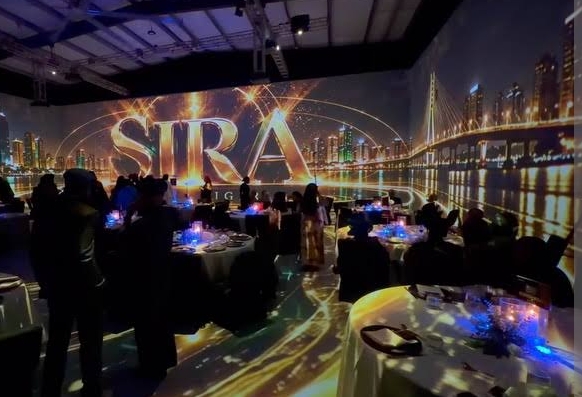
Image: SIRA hosted its third edition, themed EKETA (The Third), on October 17, 2026, at The Luxtrium in Houston, Texas.
Long before modern borders were drawn or contemporary global institutions were conceived, Africa stood as the cradle of human civilization.
From the architectural precision of the pyramids at Giza and the scholarly libraries of Timbuktu to the complex governance systems of ancient kingdoms and the artistic mastery of Benin, African ingenuity laid the foundational stones of human progress.
For millennia, Africans have pioneered advancements in mathematics, medicine, philosophy, agriculture, and governance, shaping the trajectory of the world.
Yet, across recent centuries, dominant global narratives have frequently sidelined these foundational truths, too often reducing a vast, dynamic continent to stories of struggle rather than triumph.
To reclaim this legacy, celebrating Africa and its global diaspora is not merely an act of cultural pride; it is a historical imperative. It is a necessary reclamation of narrative authority.
Leading this charge is Ayodeji Agod Savage, popularly known as AGOD, the Founder and Chief Executive Officer of Savvy Initiative, the United States-based nonprofit organization behind the Savvy Initiative Recognition Awards (SIRA).
A multidisciplinary leader whose career spans project management, organizational transformation, strategic leadership, technology, entrepreneurship, and nonprofit advocacy, Savage embodies the very spirit of African innovation he seeks to champion.
Driven by a deep passion for community development and mentorship, he established SIRA as an international platform dedicated to identifying, recognizing, and celebrating Africans and people of African descent making exceptional contributions to society.
At the heart of this movement lies a simple yet profound guiding philosophy: “We See You.”
Challenging the Narrative of External Validation
The genesis of SIRA stemmed from a sobering observation. Across every corner of the globe—from Silicon Valley boardrooms and medical research laboratories to grassroots community centers—Africans are solving complex global problems, building enduring institutions, and transforming lives.
However, these extraordinary accomplishments frequently go unheralded within African communities themselves.
“Too often, we wait for external institutions to validate African excellence before we acknowledge it ourselves,” Savage notes.
SIRA was created to dismantle this dependency. By establishing a credible, African-led institution capable of documenting and honoring its own trailblazers, the initiative shifts the locus of validation back to where it belongs.
As Savage emphatically states, “We should not have to wait for the world to tell us which Africans are extraordinary. We must learn to recognize and celebrate our own.”
This shift is especially critical for younger generations. Many young Africans grow up inundated with headlines detailing the continent’s socio-economic challenges, while remaining largely unaware of the brilliant minds who share their heritage and are actively reshaping the world. SIRA bridges this visibility gap.
By spotlighting positive African role models, the platform demonstrates what is possible, instilling a sense of belonging, dignity, and collective pride.
When one African is celebrated on a global stage, it sends an unmistakable message to millions of others that their aspirations are valid and achievable.
As Savage emphatically states, “We should not have to wait for the world to tell us which Africans are extraordinary. We must learn to recognize and celebrate our own.”
Integrity Over Influence: A Merit-Based StandardIn an era where commercialized awards and pay-to-play accolades have diluted the meaning of public recognition, SIRA distinguishes itself through uncompromising integrity.
“SIRA awards are not for sale,” Savage asserts.
The organization neither collects payments for its honors nor requests anything in return from its recipients. Financial wealth, celebrity status, social media reach, and personal connections play no role in determining who stands on the SIRA stage. Instead, “At SIRA, you do not pay to be seen. Your impact speaks for you.”
To uphold this standard, SIRA utilizes a rigorous, multi-tiered selection process.
Potential honorees—ranging from educators, scientists, and innovators to philanthropists, entertainers, community organizers, and young changemakers—are sourced through public nominations, community recommendations, professional networks, and independent research.
Even dedicated allies who have demonstrated exceptional commitment to advancing African communities are considered.
Once nominated, candidates undergo evaluation by a network of over 30 trained professionals drawn from diverse industries and walks of life.
Crucially, this evaluation operates under strict anonymity: the evaluators do not know the identities of their fellow evaluators.
Working independently, each panelist conducts deep-dive research into the nominees, assessing them across six core pillars which are: achievement and impact, leadership, innovation and creativity, community engagement, advocacy and representation, as well as resilience.
Furthermore, individual rankings are subsequently aggregated to determine the final honorees.
By eliminating groupthink, peer pressure, and personal bias, SIRA ensures that every accolade is earned strictly through merit and measurable societal contribution.
A Curated Celebration of Heritage and Intellect
The culmination of this rigorous process is the annual SIRA international awards gala—an event designed not as a conventional ceremony, but as an immersive cultural and storytelling experience.
Following its inaugural edition in Las Vegas, Nevada, in 2024, and its second installment in Chicago, Illinois, in 2025, SIRA hosted its third edition, themed EKETA (The Third), on October 17, 2026, at The Luxtrium in Houston, Texas.
At SIRA, “Africa is not merely the theme of our event. Africa is the reason the event exists.”
Every element of the gala is intentionally curated to honor the continent’s grandeur and intellectual depth.
Rather than generic trophies, award categories bear the names of iconic African landmarks, natural wonders, and philosophical concepts: including: Kilimanjaro, the Nile, Giza, Serengeti, Baobab, Iroko, Kalahari, and Umoja.
Each honoree’s journey is immortalized through documentary-style films, ensuring their sacrifices and triumphs are preserved as part of a living historical archive.
Beyond glamour, music, fashion, and artistic performances, SIRA prioritizes intellectual engagement.
The gala serves as a forum for urgent conversations regarding African identity and future-readiness.
At the 2026 Houston edition, for instance, a featured panel explored the critical question: “Who Owns Our History in the Age of AI? Preserving African Truth, Memory&Identity in a Digital World.”
By pairing cultural celebration with forward-looking dialogue, SIRA ensures attendees leave with both heightened cultural confidence and a renewed commitment to collective progress.
Coming Home: Lagos 2027 and the Global Future
After three successful editions in the United States, SIRA is preparing for a historic milestone. In 2027, the fourth installment of the awards will cross the Atlantic to Lagos, Nigeria, under the evocative theme ÀPÉJỌ: The Convergence.
For Savage, bringing SIRA to Nigeria carries profound personal and symbolic weight.
As his country of origin, Nigeria represents an undeniable powerhouse of entrepreneurial grit, creative energy, and global cultural influence.
Yet, the vision for Lagos 2027 transcends national borders.
ÀPÉJỌ symbolizes the gathering of the global African family—uniting continental trailblazers and diaspora leaders across generations, disciplines, and nations.
As Savage declares, “It is Africa’s turn to celebrate Africans in Africa.”This homecoming aligns with a broader strategic blueprint for how Nigeria and the wider African continent can project their influence globally.
According to Savage, unlocking Africa’s full potential requires deliberate action across several fronts:Narrative Ownership: Investing in African-owned media, documentaries, and storytelling platforms to present authentic achievements to the world.
Institutional Excellence: Building credible recognition platforms, research bodies, and professional networks that operate to the highest international standards.
Cultural Diplomacy: Leveraging Africa’s booming music, film, fashion, literature, and languages as potent instruments of global soft power.
Diaspora-Continent Synergy: Creating intentional pathways—through conferences, exhibitions, and investment forums—that link global African success directly to local economic development, tourism, and knowledge transfer.
Building an Enduring Legacy
Ultimately, Savage views SIRA as far more than an annual celebration; it is a catalyst for sustained empowerment. Under the broader umbrella of Savvy Initiative, recognition is paired with practical action through youth-focused programs such as EmpowHER, Youth Tech Connect, and eMentor.
These initiatives equip young people with the digital skills, mentorship, and confidence required to become the next generation of innovators and leaders.
“Africa does not lack extraordinary people,” Savage reflects. “What we need are stronger systems to identify them, connect them, celebrate them, and preserve their stories.”
By building an institution designed to outlive its founder, Ayodeji Agod Savage is ensuring that future generations will never have to look outside their heritage to find examples of greatness. Through SIRA, the message to every African innovator, builder, and dreamer across the globe is clear and unwavering: We see your work, we honor your sacrifice, and your story will be remembered.”
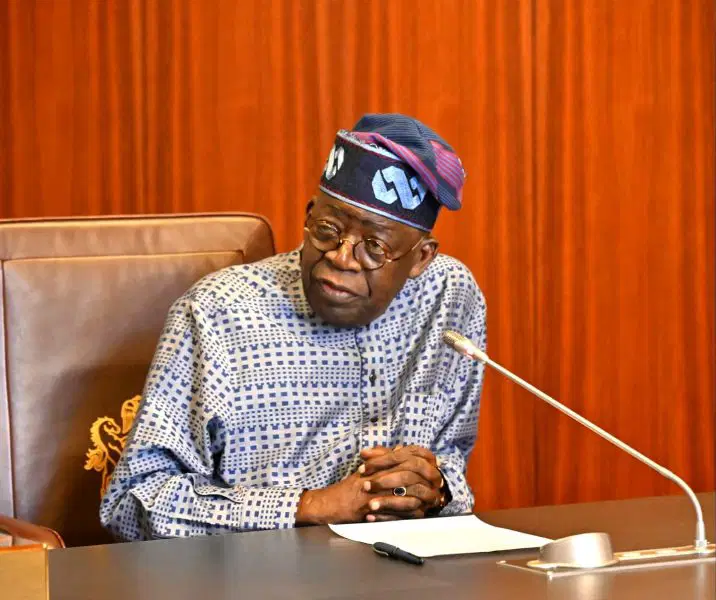
The African Democratic Congress Presidential Campaign Council (ADC-PCC) has described as an insult to Nigerians the statement credited to President Bola Ahmed Tinubu, through his Special Adviser on Information and Strategy, Bayo Onanuga, declaring that “The Question Is What We Build, Not How Much We Borrow.”
In a statement issued in Abuja by its Director of Media and Publicity, Kola Ologbondiyan, the ADC-PCC challenged President Tinubu to identify what his administration has actually built with the mountain of loans accumulated since assuming office in 2023. The council insisted that Nigerians have seen little or no tangible returns on the country’s growing debt burden.
Ologbondiyan said it was particularly disturbing that Mr Onanuga would attempt to dress the President in borrowed garments by speaking about infrastructure and development when the administration has failed to demonstrate commensurate achievements despite unprecedented borrowing.
He alleged that the only visible project associated with the administration’s concern for electricity is a solar farm installed to guarantee power supply within the comfort of the Presidential Villa, while millions of Nigerians continue to grapple with unreliable electricity.
“For three and a half wasted years, the Tinubu government has borrowed without restraint and built nothing. No value, no legacy, no impact,” Ologbondiyan stated.
“Except for projects inherited from the late President Muhammadu Buhari, many of the projects being advertised by the Tinubu administration are nothing but audio projects. They exist only on paper, as conceptual designs or as announcements on newspaper pages and television screens. Under Tinubu, virtually every project exists in a press statement.
“Where is the Lagos-Calabar Coastal Highway? Audio. Where is the Sokoto-Badagry Superhighway? Audio. Where is the Trans-Sahara Superhighway? Audio. Where are the promised electricity grid upgrades? All propaganda, no commensurate progress, just media hype from Bayo Onanuga and his team.
“Even the Abuja-Kaduna-Kano Highway, awarded more than eight years ago, remains a source of concern to motorists. Its prolonged construction and delays tell the story of APC governance.
“Mr President must wake up and confront the reality facing Nigerians, if there is still time left between now and January 16. Citizens are hungry and enduring excruciating hardship. People are dying from hunger, insecurity and deprivation, while the government remains preoccupied with propaganda and self-congratulatory statements. These are the real signposts of what the Tinubu administration has built in almost four years.
“Today, ministries are barely functioning, agencies are struggling, and critical directorates are failing to deliver. Nigeria is practically comatose.
“The Tinubu Presidency came into power without a convincing blueprint or workable ideas and, after almost four years, has offered Nigerians little beyond failure, hardship, poverty and insecurity.
“If borrowing is truly for development, let President Tinubu show Nigerians one tangible project his administration has delivered with its trillions of naira in loans, beyond the solar farm in the Presidential Villa. The only thing this administration has successfully built is hardship.
“We appeal to international donors, development partners and financial institutions to exercise greater scrutiny and insist on accountability, transparency and prudence before extending further loans to Nigeria.
“Borrowing is not inherently wrong when the benefits translate into improved living conditions for citizens. What is unacceptable is a situation in which the country continues to accumulate debts without corresponding benefits for the people.
“Nigerians must not be compelled to continue financing the luxury, profligacy and privileged lifestyle of those in power while ordinary citizens wallow in poverty. Future generations should not be burdened with debts incurred without demonstrable benefits to them.
“The National Assembly must rise to its constitutional responsibility and save the country from being mortgaged through indiscriminate borrowings. It must stop acting as a rubber stamp for every loan request and defend the economic future of Nigeria.
“History will not forgive the 10th National Assembly if it stands by while the country is plunged deeper into a cycle of unsustainable indebtedness.”


CBN Pledges Policy Consistency Into 2027

Naira Exchange Rates, Thursday,26 Nov

MAN Seeks Tobacco Exclusion From NAFDAC Bills Over Regulatory Overlap

BREAKING: Lagos Govt Declares Today, Thursday Work-Free to Mark 2026 Ìṣẹ̀ṣe Day

Tech Expert, Zuckerberg trains with UFC champions, Adesanya, Alexander

Why we Increase the 2025 Budget by ₦700bn – Bichi
-
 Entertainment2 days ago
BREAKING: Veteran Nollywood Actor Chief Pete Edochie Dies at 79
-

 News2 days ago
Katsina Suspends Emir of Daura Over Sexual Allegations By Polish Tourist
-
 News2 days ago
“We’ve Lost a Titan, Legend, an Icon,” Gov Mbah Mourns Edochi
-
 News2 days ago
Arise TV Obaigbena Denies Police Invitation, Calls Declaration ‘Smear Campaign’
-
 Business1 day ago
Naira Exchange Rates, Thursday,26 Nov
-

 News2 days ago
Mother, daughter crushed to death by truck in Abuja
-
Business2 days ago
Naira Exchange Rates, Wednesday, 25 Nov 2026
-

 Business2 days ago
Cardoso : Pressure on The Naira Is Seasonal Factors- It won’t last